

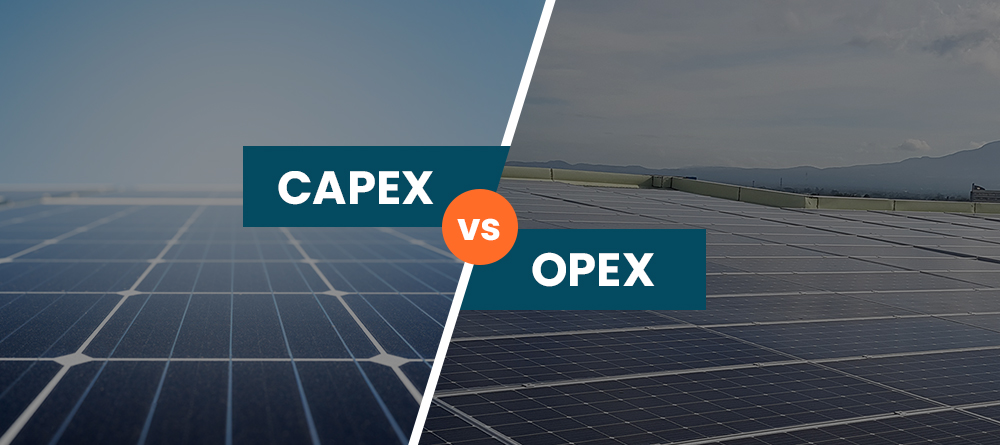
Which Solar Financing Model is Best for You in the Philippines?
For homeowners and business owners in the Philippines, choosing how to pay for your solar panel system is a major financial decision. The choice between CAPEX (Capital Expenditure) and OPEX (Operational Expenditure) comes down to your budget and long-term goals:
-
CAPEX (Buying): You pay the full upfront cost (typically ₱500,000 to ₱2M+ for a commercial system) and own the entire system. This model offers the highest long-term savings, with a payback period usually between 3 to 6 years. Ideal if you have the capital and plan to stay in your property long-term.
-
OPEX / PPA (Leasing): You pay little to nothing upfront and sign a long-term agreement to purchase the solar electricity generated, often at a rate lower than Meralco. Ideal for conserving cash flow or if you are a tenant.
Quick Answer: If you want maximum long-term savings and asset ownership, choose CAPEX. If you want immediate bill reduction with zero upfront investment, choose an OPEX/PPA model.
Still unsure? Get a Free, Personalized Savings Comparison based on your last Meralco bill.
| Feature | CAPEX (Ownership Model) | OPEX / PPA (Lease / Subscription Model) |
| Upfront Cost | High (Full system cost) | Zero or Very Low |
| System Ownership | You own the asset | The solar provider owns the asset |
| Long-Term Savings | Higher (You keep all savings after payback) | Lower (You pay for power at a discounted rate) |
| Maintenance & Repairs | Your responsibility (budget ~1-2% of system cost/year) | Fully covered by the provider |
| Contract Term | None (You own it outright) | Typically 15-25 years |
| Best For | Property owners with capital, long-term planners, businesses seeking asset growth | Businesses focused on cash flow, tenants, those who want hassle-free maintenance |
Explore the differences and benefits of CAPEX vs OPEX solar models in our latest blog. Understand which financing option best suits your needs.
If you are considering switching to solar energy for your home or business, you have just taken the first step toward a cleaner and greener power source. Moreover, solar energy can significantly reduce your power bills and annual power costs.
And when it comes to getting solar power for your home or business, then there are two ways to go about it – The CAPEX and OPEX model.
The OPEX Model – An Overview
OPEX stands for operating expenses model and is a system of ownership where the developer or the solar developer owns the entire solar system. The customer pays only for its electricity consumption generated by the solar panel system, and not for anything else.
The customer also need to sign a PPA or a Power Purchase Agreement for the energy supply you get.
Advantages of the OPEX model
The OPEX model of ownership provides you with certain benefits like:
1. Zero installation and maintenance costs
Since the solar developer takes responsibility for the system, they will bear the entire cost of solar installation and will also provide you with operational and maintenance services throughout the lifetime of the project.
2. Maintaining system for optimal efficiency
Your solar developer will take responsibility for maintaning your system so that it runs with optimal efficiency and performance. They will be responsible for taking care of any drops in performance.
Disadvantages of the OPEX model
The OPEX model, however, has certain disadvantages to it also, which are highlighted below.
1 .You’re not the owner
The first drawback of the OPEX model is that you aren’t the owner of the solar system. The solar system that is installed in your home or business still belongs to the developer.
2. Contractual obligations
Some types of OPEX agreements can include certain agreements in the contract, like penalties for early termination. Thus, if your circumstances change within the contract period, you may have to pay extra in accordance with your contract.
CAPEX Model Of Ownership – An Overview
The CAPEX model of ownership is a model based on self-financing. Here, the customer will have to bear all the costs incurred in installing the rooftop solar system. The costs here include all expenses that will be used for setting up, maintaining, and operating the project. Moreover, the equipment costs, labor charges, upgrades, and other material expenditures are included here.
If you opt for the CAPEX model, then all you need to do is contact a reputed solar panel company in philippines like Nativ Techniks Inc. to own your solar system.
Once set up, you can have complete ownership of your solar plant and enjoy reduced electric bills for the entire lifetime of your panels.
Advantages of the CAPEX model of ownership
Some advantages of the CAPEX model of ownership are illustrated below.
1. Complete ownership of the model
You get to have complete ownership of your solar plant and can decide on the type of technology you want and the quality of your panels’ components.
2. Lower operational costs
Customers get to have reduced electric bills that helps them save more in the long run. Also, lower electric bills mean lower operational costs, which in turn, makes their business more competitive.
3. Complete control of your model
You have the freedom to make modifications to your system, upgrade it, and expand it without having to depend on someone else to do it for you.
4. Increased asset value
When you own a solar panel system, it can increase the net value of your property and also appeal to prospective tenants or buyers.
Disadvantages of the CAPEX model
Even the CAPEX model has some downsides to it, which is illustrated below.
1. Customer has to bear all associated risks
A main disadvantage of the CAPEX model is that the customer has to bear all risks involved in owning and operating a solar system, like management, maintenance, and downsides.
2. High investment
The cost of purchasing a solar system can be quite high. And in the CAPEX model, the customer has to bear the entire cost of ownership.
Which model is right for you?
If you have the initial capital to invest in a solar power system, then you can opt for a CAPEX model. A CAPEX model has a huge potential for payback once your initial investment pays off, and you can even develop a 30% equity.
On the other hand, the OPEX model is favored by small businesses and industries that don’t want to bear the high initial costs of owning a solar power system. Moreover, market liquidity and shareholder options also make it a viable choice for low-risk profile businesses that have financial restrictions.
Final thoughts
Ready to See Your Exact Savings? Let Nativ Techniks Guide You
Every property’s energy needs and financial situation are unique. As a leading solar provider in the Philippines, we don’t just explain the models—we help you crunch the real numbers.
Contact us today for a free, no-obligation analysis. We will:
-
Review your last 12 months of Meralco bills.
-
Calculate precise system sizing and costs for both CAPEX and OPEX models.
-
Provide a clear ROI and payback timeline for CAPEX, or a savings forecast for an OPEX PPA.
Get Your Free Solar Financing Analysis:
📞 Call: +639176310032
📧 Email: wecare@nativtechniks.com
💬 Click here to send us your Meralco bill for an instant quote.




Comment (1)
I am interested in your solar program